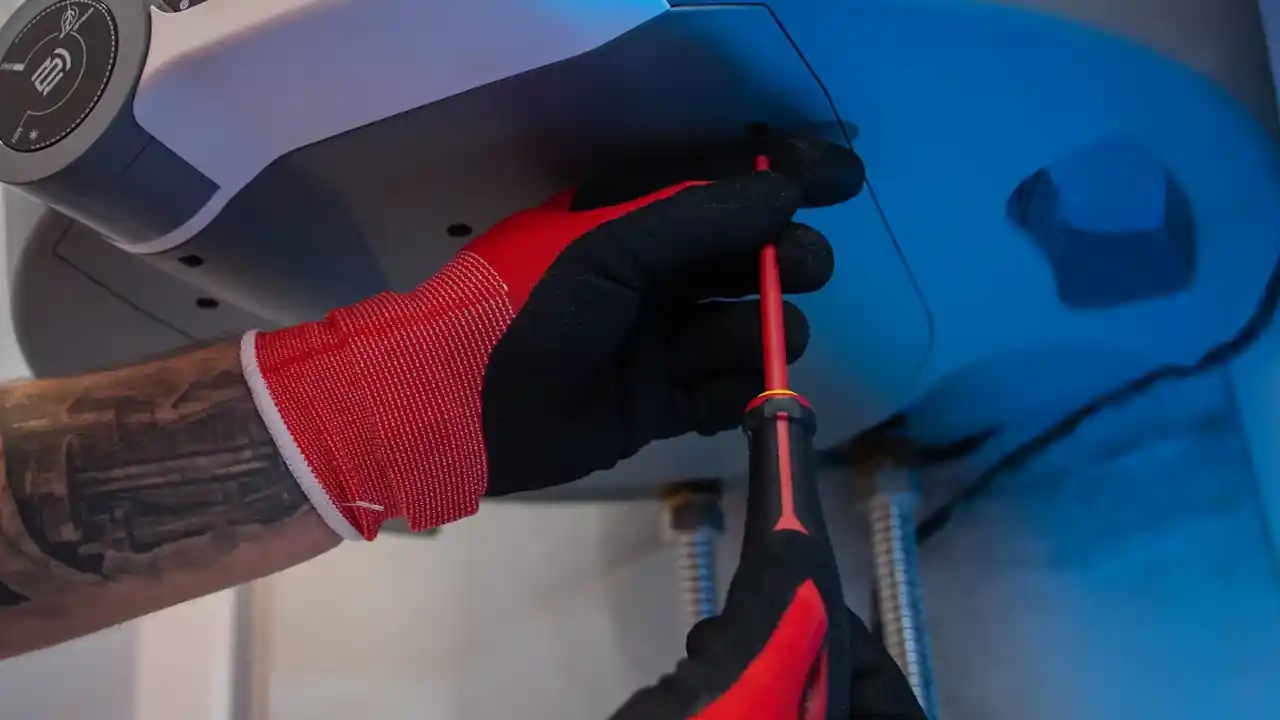
What is a water heater element gasket?
On an electric water heater, each heating element screws into a threaded port in the side of the tank, and a rubber gasket seals the joint. When the gasket hardens, cracks or loosens, water leaks out behind the access panel. Water heater element gasket replacement stops the leak, usually without replacing the heater. Turn off the breaker before anyone checks for water heater element gasket replacement.
Most residential electric tanks have two elements, an upper and a lower, each behind its own metal access panel with insulation and a thermostat. The elements reach into the water and heat it directly. Because they sit below the waterline, the seal around them holds back the full weight and pressure of the tank. Water heater element gasket replacement requires draining the tank below the element.
The lower element usually works hardest and sits closest to the sediment that collects at the bottom of the tank, so its gasket often fails first. The upper element can leak too, especially on older heaters or after the tank has been drained and refilled several times. Scale around the element is a common reason for water heater element gasket replacement.
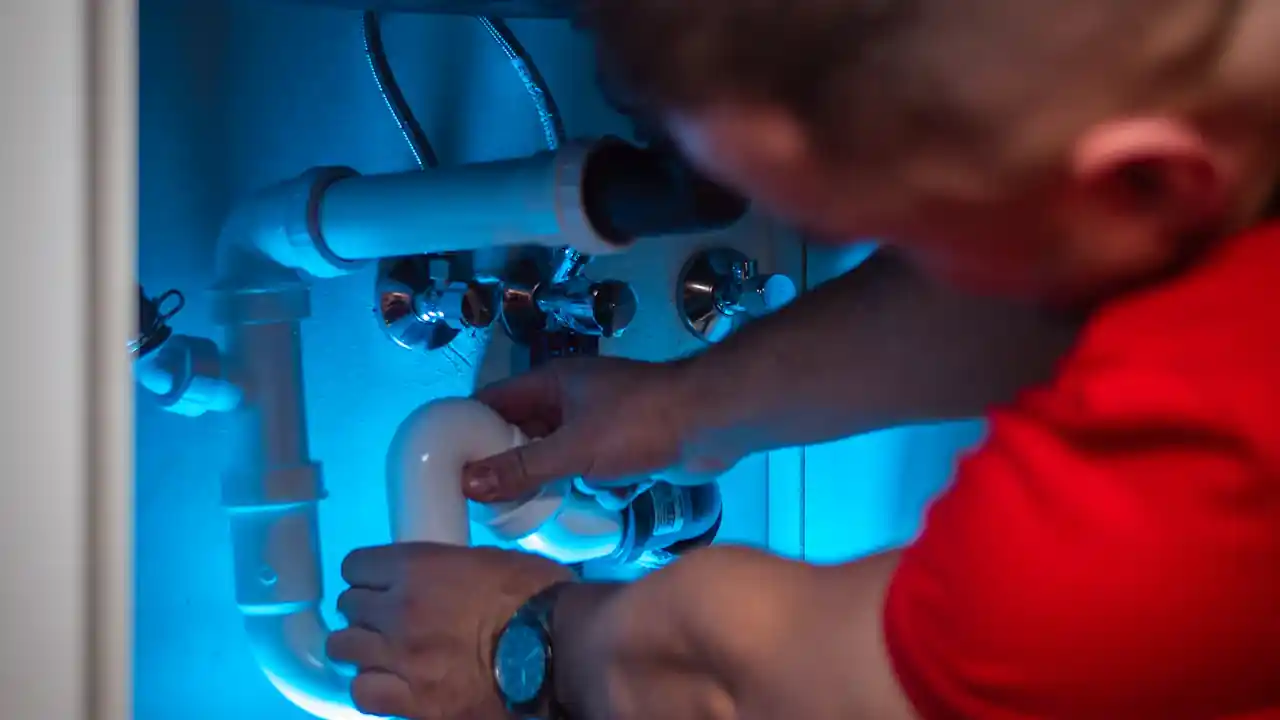
Why element gaskets leak
Heat and age
Rubber exposed to repeated heating and cooling slowly hardens and loses its ability to seal. Water heater element gasket replacement is often done with a new element.
Sediment
Mineral buildup around the lower element traps heat, overworks the element and adds stress to the gasket. Southern California's hard water makes this common. Rust streaks below a cover usually point to water heater element gasket replacement.
A loose element
Elements can loosen slightly with thermal movement, letting water past the gasket. Water heater element gasket replacement is cheaper than a full tank replacement.
Re-used gaskets
If an element was replaced in the past and the old gasket was reused, it may never have sealed properly. A provider tests the element during water heater element gasket replacement.
Corroded port threads
Rust in the tank's element opening can stop any gasket from sealing. This often goes along with a used-up anode rod. Water heater element gasket replacement keeps water away from live wiring.
8 signs of an element gasket leak
- Water or rust stains around an access panel.
- Wet insulation behind the panel cover.
- Water running down the side from panel height, not from the top.
- A tripped breaker or a heater that keeps shutting off.
- Lukewarm water from a failing or shorted element.
- Crusty white deposits at the panel edges.
- A burnt smell near the panel.
- Rust on the thermostat or wiring terminals.
Safe checks before you call
- Cut the power. Switch off the heater's dedicated breaker before touching anything.
- Close the water. Turn the cold-water valve above the heater clockwise.
- Look, do not touch. From outside, check for water or rust around the panel edges.
- Protect the area. Lay towels down and keep children and pets away.
- Note the details. Photograph the label and the wet area for the provider.
Electrical hazardDo not open the access panels or touch wiring if there is water inside. Water and 240-volt connections are a dangerous combination.
How an element gasket is replaced
- Power off and confirm. The breaker is switched off and the wiring tested to confirm it is dead.
- Drain below the element. The tank is partly or fully drained, depending on which element is leaking.
- Remove the element. Wires are disconnected and the element unscrewed with an element wrench.
- Inspect the port. Threads and the sealing surface are cleaned and checked for corrosion.
- Fit a new gasket. A new gasket, and often a new element, is installed and tightened correctly.
- Refill before power. The tank is refilled and a hot tap opened to purge air, then power is restored.
- Test. The heater runs a cycle while the provider checks for leaks and correct heating.
Pro tipAsk the provider to flush sediment while the tank is drained. It costs little extra time and helps the new gasket and element last.
What affects the cost of an element gasket repair?
| Factor | Why it matters |
|---|---|
| Which element | The upper element needs less draining than the lower one. |
| New element too | Replacing the element with the gasket adds a part but saves a future visit. |
| Sediment | Heavy scale makes draining and cleaning take longer. |
| Port condition | Corroded threads may point toward replacing the heater. |
See the leak repair cost guide for repair-versus-replace factors. Wet insulation behind the cover is a sign water heater element gasket replacement is needed.
Water heater element gasket replacement and the rest of the electric system
An electric tank heater works differently from a gas heater. Instead of a burner under the tank, it has heating elements reaching into the water, each controlled by its own thermostat behind an access panel. The upper element heats first; once the top of the tank is hot, control passes to the lower element. Because the lower element runs most often and sits in the sediment zone, it is usually the first to fail and the first gasket to leak. Water heater element gasket replacement uses a gasket matched to the element.
That is why water heater element gasket replacement is often done alongside a check of the thermostats, the wiring terminals and the insulation behind the panels. Water that has been seeping onto a thermostat can corrode its contacts, and wet insulation should be dried or replaced so it does not hold moisture against the tank. Ask about flushing when you book water heater element gasket replacement.
When the heater is back in service, the provider should confirm both elements heat correctly. A heater that only produces lukewarm water after the repair may have a second failed element or thermostat. Water heater element gasket replacement restores a dry, safe electric heater.
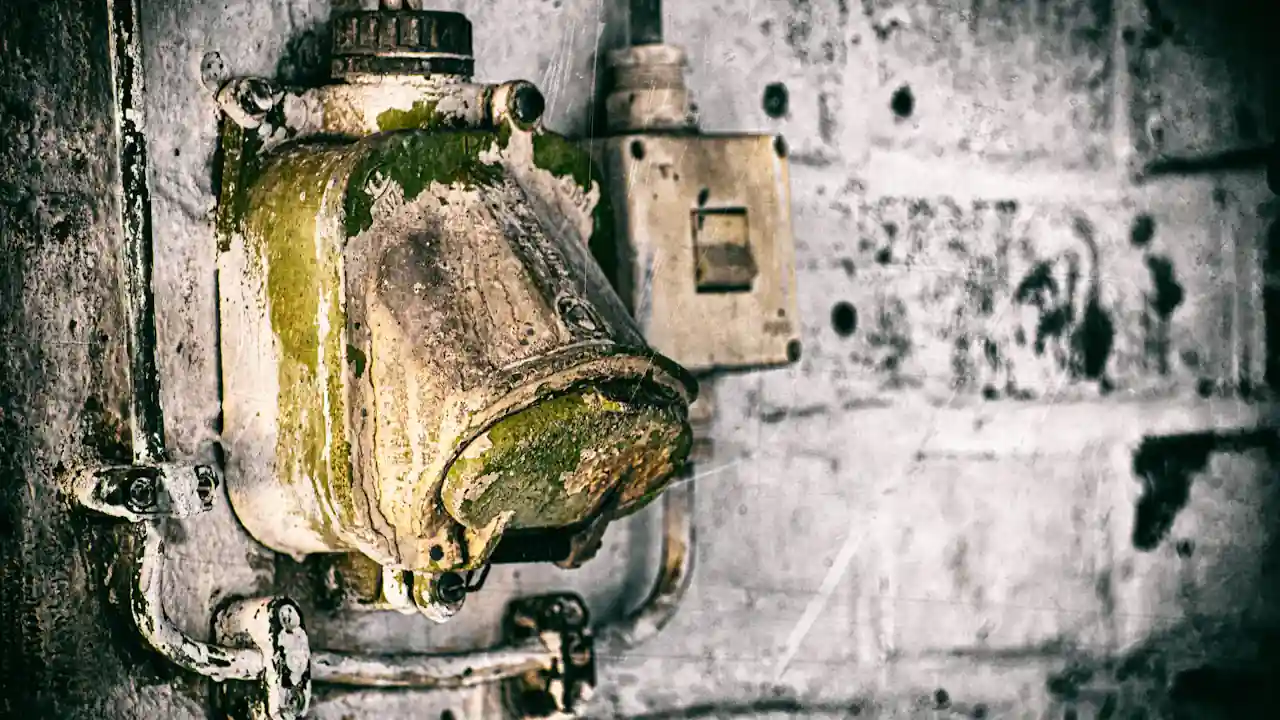
When an electric heater leak is urgent
If water is running from a panel, the breaker keeps tripping, you smell burning, or water is near the electrical panel, switch off the breaker if you can do it safely from a dry floor and call (562) 539-0506. Do not stand in water to reach the panel. The emergency guide covers shutdown steps.
Water heater element gasket replacement: frequently asked questions
Why is my electric water heater leaking from the element?
The rubber gasket that seals the heating element against the tank has hardened, cracked or shifted, or the element has loosened. Sediment and repeated heating cycles speed up gasket wear.
Is a leaking element gasket dangerous?
It can be, because water is leaking right next to electrical connections. Switch off the heater's breaker before looking, and do not touch wet wiring.
Can I replace the element gasket myself?
It requires cutting power, draining the tank below the element, removing and reinstalling the element with a special wrench, and refilling before power is restored. Mistakes can ruin the new element or create an electrical hazard, so it is best left to a pro.
Should the element be replaced at the same time?
Often, yes. If the tank is drained and the element is out, replacing an older or scaled element with a new one and a new gasket costs little extra and avoids a second visit.
What is dry firing?
Dry firing happens when power is turned on before the tank is full of water. The element burns out in seconds. That is why power must stay off until the tank is refilled and air is purged.
Can a corroded element port be repaired?
If the threaded opening in the tank is badly corroded, a new gasket may not seal. In that case replacing the heater is usually the safer choice.
Why does my electric water heater only give lukewarm water?
Often one element or its thermostat has failed. A leak at the element gasket can also damage the element or thermostat if water reaches the electrical parts.
Does an element gasket leak mean the tank is failing?
Not necessarily. Gaskets wear on their own. But if the threaded port around the element is badly rusted, that corrosion can be a sign the tank is ageing.
How long does an element gasket repair take?
Most of the time goes into draining the tank below the element and refilling it afterward. The swap itself is quick once the water level is down, and the heater is tested through a full cycle before the provider leaves.